If you are thinking about buying a rental in Chantilly, you are probably asking a practical question: will the numbers and the location support a smart long-term hold? That is the right place to start. Chantilly is not a bargain-rent, high-turnover market. It looks more like a stable Fairfax County commuter suburb where product type, transportation access, and local rules can make a big difference in your returns. Let’s dive in.
Why Chantilly gets investor attention
Chantilly is a relatively small market with 24,036 residents, 7,552 households, and 7,598 housing units. It is also heavily owner-occupied, with 81.1% of housing units owner-occupied. That matters because you are buying into a market where rentals are not the dominant housing type, which can support demand for well-located rental homes.
The local housing profile also points to a more established suburban renter base. Median gross rent is $2,312, average household size is 3.2 people, and the mean commute time is 27.8 minutes. In practical terms, many renters in Chantilly may be looking for space, functionality, and access to major job centers rather than a short-term or entry-level rental setup.
What rental product fits Chantilly best
Fairfax County describes the Western Fairfax and Chantilly area as a suburban setting with low-density neighborhoods, mixed-use centers, and a mix of single-family homes, townhomes, condominiums, and rental apartments. That broad mix gives investors multiple entry points, but not every property type performs the same way.
Countywide housing stock is 45.6% one-unit detached, 22.4% one-unit attached, and 14.7% in structures with 20 or more units. For many investors, that makes Chantilly especially relevant for townhomes, condos, and detached homes rather than only large apartment-style investments.
Townhomes stand out
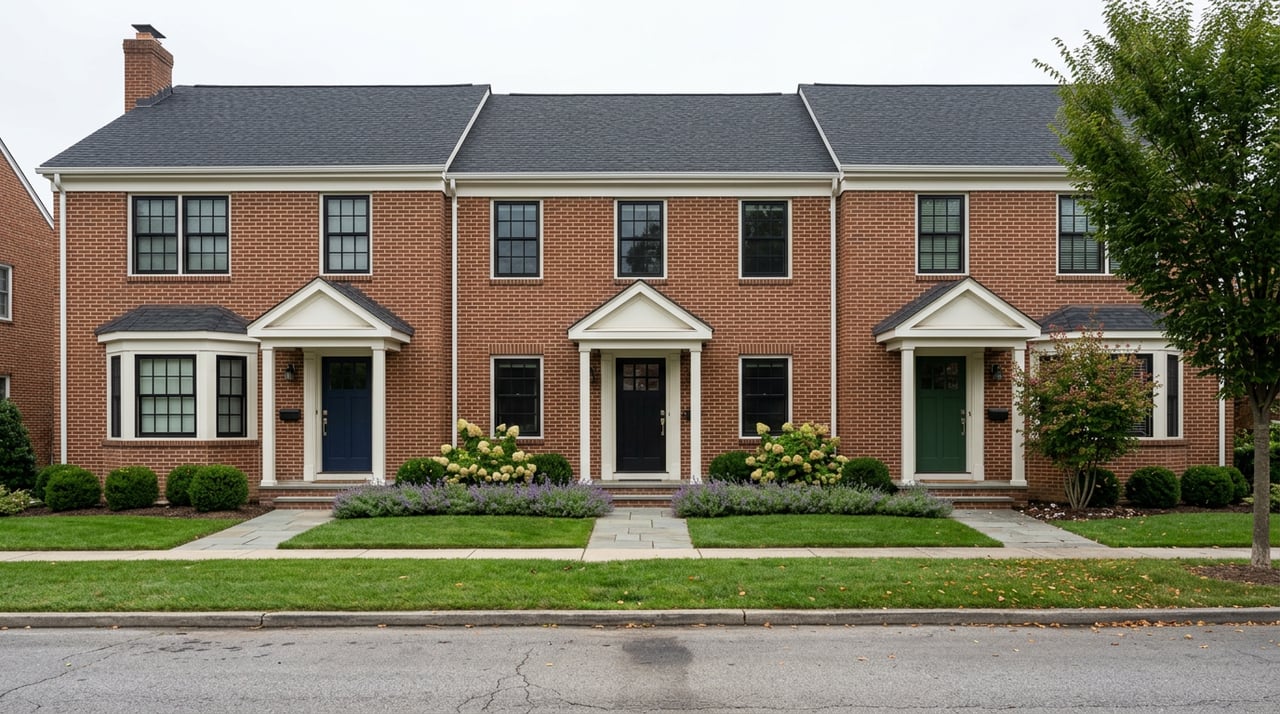
Fairfax County defines a townhouse as a multi-story, single-family attached dwelling with a common wall. That product type matters in and around Chantilly because townhome rentals are common in suburban Northern Virginia and often line up with what renters want in this area: more bedrooms, more usable living space, and a residential setting.
The 2024 county rental study found townhouse rentals averaged $2,371 per month. Just as important, townhouse vacancy averaged only 1.9%, which was lower than the 4.4% overall vacancy rate in the county rental-complex study. That suggests relatively tight demand for this type of rental product.
Family-sized units may stay competitive
The same county study shows lower vacancy in larger units. Two-bedroom units posted 4.1% vacancy, three-bedroom units 3.8%, and four-bedroom units 2.7%. That pattern suggests larger rentals may have a steadier demand base than smaller units, especially if your property offers practical features like parking, storage, and commuter access.
This does not mean every large property is a strong investment. It does mean you should look closely at layouts, monthly carrying costs, and neighborhood-level competition when comparing a condo, townhome, or detached home.
How to think about rent benchmarks
One of the easiest mistakes investors make is relying on just one rent data point. In Chantilly, it helps to compare broader county data with current listing activity so you can underwrite more carefully.
Fairfax County reported that market-rate rental complexes averaged $2,092 per month in 2024. By unit type, average rents ranged from $1,708 for studio or efficiency units to $2,912 for four-bedroom units. These figures exclude subsidized units, accessory dwelling units, workforce dwelling units, individually leased units, and condominiums, so they are best used as broad market context rather than a perfect pricing tool for every individual property.
Zillow’s Chantilly market snapshot showed an average asking rent of $3,299, with houses listed from $975 to $6,825. That is useful as a live snapshot of active listings, but it is not the same as closed lease data. If you are underwriting a potential purchase, it is smart to treat county figures as market context and active listings as a reality check on current competition.
Demand drivers investors should watch
A rental property does not perform in a vacuum. In Chantilly, transportation access and job growth are two of the biggest reasons investors keep this area on their radar.
Route 28 connects to Route 29, Route 234, I-66, Route 50, Dulles International Airport, and Route 267. Dulles also has a 14- to 16-mile access highway connecting to I-66 and the Beltway. For renters who need flexibility around commuting and airport access, that road network is a real strength.
The Silver Line extension adds service to Washington Dulles International Airport, Reston Town Center, Herndon, Innovation Center, Loudoun Gateway, and Ashburn. Fairfax Connector Route 901 also links Herndon, Centreville, and Chantilly areas to residential and employment centers. Even if your property is not walkable to rail, regional connectivity still plays a major role in renter appeal.
Jobs and housing are not growing evenly
Fairfax County says jobs outpaced homes between 2013 and 2025, with about 50,000 jobs added compared with 22,000 homes. The county also states that rents have risen 40% since 2015 and that 45% of renters are cost-burdened. For investors, that points to continued pressure in the housing market, but it also reinforces the need to price realistically and understand affordability limits.
Employer activity in the Chantilly area adds another layer of support. Fairfax County EDA highlighted a new AT&T regional hub in Chantilly and an expansion by Systems Planning and Analysis in Chantilly. Local business investment does not guarantee performance for every rental, but it does support the case for continued housing demand in the broader submarket.
Vacancy looks relatively tight
Fairfax County’s 2024 ACS profile shows 96.5% occupied housing, 3.5% vacant housing, and a 3.4% rental vacancy rate. The county rental-complex study found 4.4% overall vacancy. Those are not signs of an oversupplied rental market.
For an investor, this matters because vacancy affects more than just monthly income. It also shapes your pricing power, the likely speed of lease-up, and the importance of presenting the property well from day one. In a market like Chantilly, clean condition, smart pricing, and strong marketing can still make a meaningful difference.
What to underwrite before you buy
A promising rent estimate is not enough. In Chantilly, your deal can change quickly once you factor in taxes, association rules, occupancy limits, and whether the property has any unapproved living space.
Check the tax district
Fairfax County’s FY2027 adopted base real estate tax rate is $1.12 per $100 of assessed value, effective July 1, 2026. The county also notes that different tax districts can apply to a parcel. That means you should verify the exact district on the specific property before you finalize your numbers.
Review HOA or condo restrictions early
If you are buying a condo or townhome, do not wait until the last minute to review association rules. Lease restrictions, rental caps, move-in requirements, and other private rules can affect whether the property works as an investment. The county also notes that private lease, condo, or HOA rules can be stricter than county standards.
Understand occupancy limits
Fairfax County household-living rules limit unrelated occupancy in a dwelling unit. On single-family residential lots, only one dwelling is allowed unless an accessory living unit is approved. This is especially important if you are considering a larger home and thinking about room-by-room leasing or using a basement as a separate rental setup.
Confirm whether added living space is permitted
If you are looking at a first-home-to-rental conversion or a home with a basement setup, verify whether any accessory unit is actually permitted under county rules. A layout that looks flexible on paper may not be lawful to rent the way you expect. This is one of the most important diligence steps in Chantilly.
Virginia landlord rules to know
Virginia’s Residential Landlord and Tenant Act places some clear guardrails around security deposits. The law caps a security deposit at two months of rent. It also requires a written, itemized deposit disposition within 45 days after the tenancy ends or the tenant vacates.
For investors, this is not just a compliance issue. It is also part of running a professional rental business with clean systems and clear expectations from the start.
Is Chantilly a good fit for your strategy?
Chantilly may be a better fit for investors who want stable suburban demand, stronger rent levels, and property types that appeal to longer-term tenants. It may be less attractive if you are searching for a low-cost entry point or a market built around very high turnover.
In many cases, the most promising opportunities may come from townhomes, larger condos, or detached homes with practical commuter access and straightforward rental compliance. The key is not just finding a property that could rent. It is finding one that rents well, aligns with county rules, and still works after taxes, vacancy, and carrying costs.
If you are weighing a Chantilly purchase, a clear local read on rents, product type, and property-specific restrictions can save you time and help you avoid expensive surprises. If you want help evaluating an investment property in Northern Virginia, Catherine Marie Wojtowicz can help you look at the numbers, the location, and the details that matter before you buy.
FAQs
What makes Chantilly different from other rental markets in Northern Virginia?
- Chantilly stands out as a heavily owner-occupied suburban market with higher rent levels, relatively low vacancy, strong commuter access, and demand for practical housing types like townhomes and larger rentals.
What rental property type may perform well in Chantilly?
- Based on Fairfax County data, townhomes and larger family-sized rentals may be worth a close look because townhouse rents averaged $2,371 and townhouse vacancy was a low 1.9% in the county rental study.
What rent data should investors use for Chantilly rentals?
- Use both Fairfax County rental data for broad market context and current Chantilly listing activity for a live snapshot of competition, then adjust for the specific property’s size, condition, and location.
What local rules matter when buying a Chantilly rental?
- Important items include the property’s tax district, HOA or condo restrictions, county occupancy limits, and whether any basement or accessory living area is lawfully permitted as rental space.
What does Virginia law say about security deposits for rentals?
- Virginia law caps security deposits at two months of rent and requires a written, itemized deposit disposition within 45 days after the tenancy ends or the tenant vacates.
Is Chantilly a good market for converting a primary home into a rental?
- It can be, but you should first verify local tax district details, any HOA or condo restrictions, occupancy rules, and whether any accessory or basement living area is permitted under county rules.